How to Make Vietnamese Phin Coffee (Cà Phê Phin)
What is Vietnamese phin coffee?
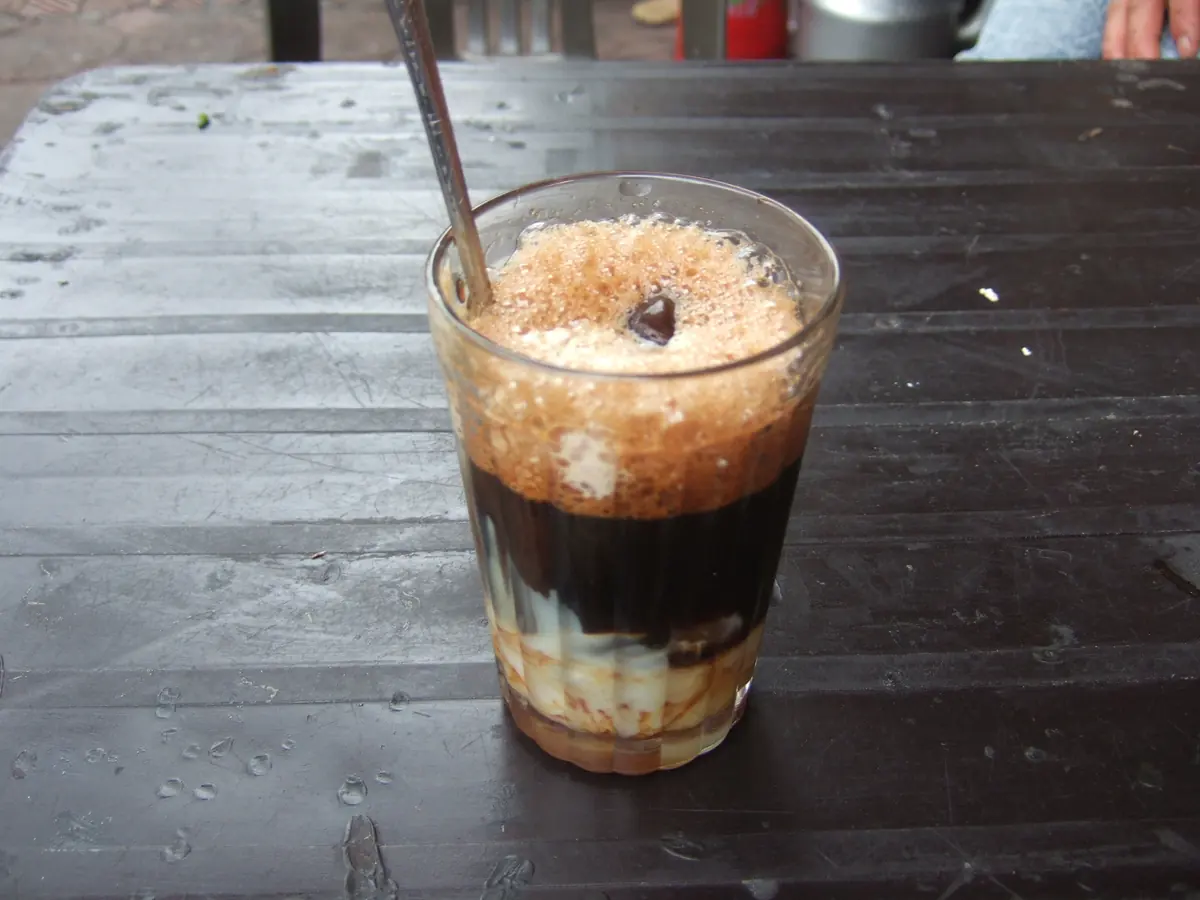
Vietnamese phin coffee is coffee brewed slowly through a phin, a small metal filter that sits on top of your cup or glass. The slow drip makes a strong, rich coffee, traditionally from robusta beans, which taste bolder and carry more caffeine than arabica (Copper Cow Coffee, n.d.). It is often served with sweetened condensed milk, either hot (cà phê sữa nóng) or over ice (cà phê sữa đá), and black coffee over ice is cà phê đá.
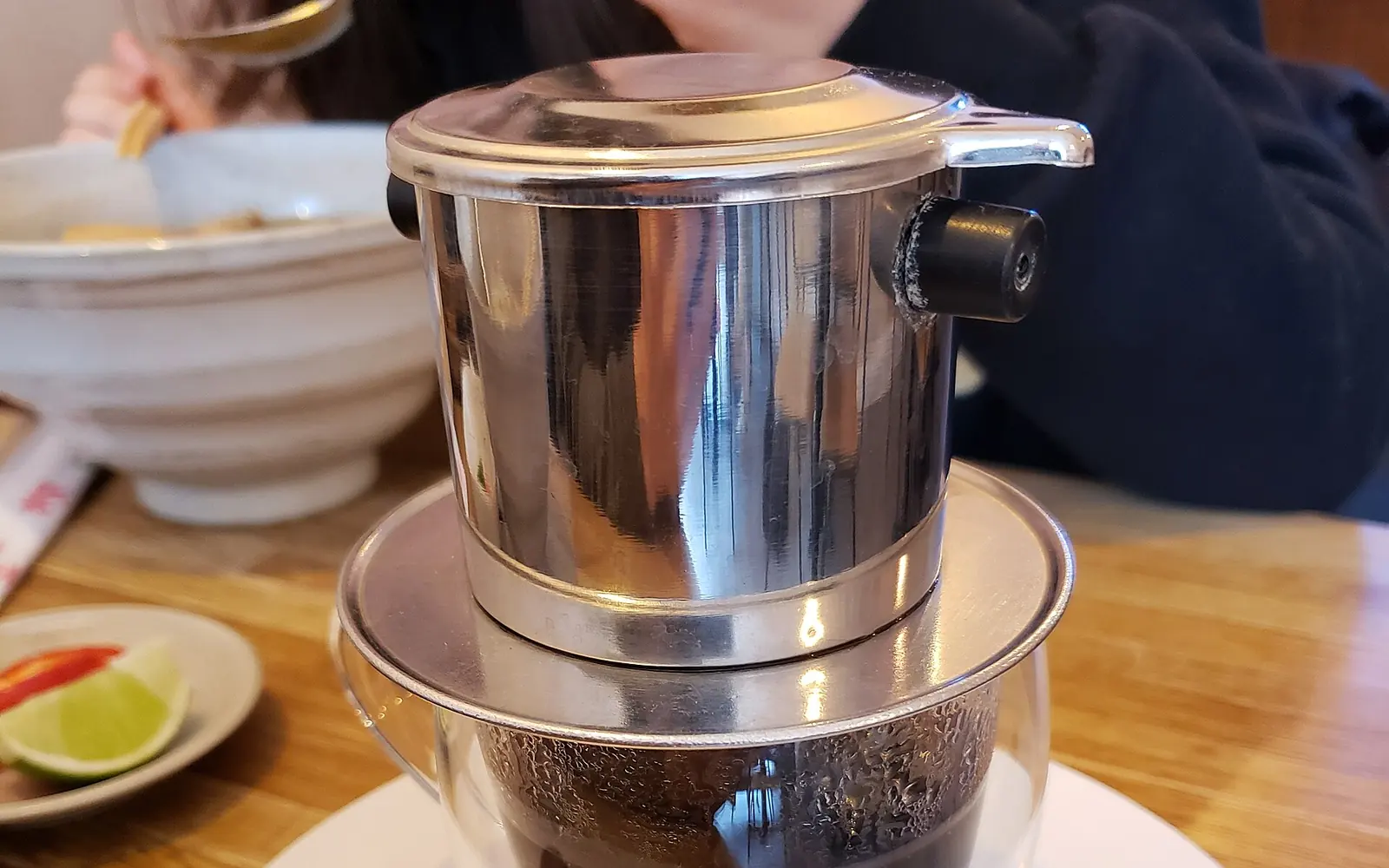
What is a phin filter?
A phin has four parts: a perforated base plate that rests on the glass, a brew chamber, a gravity press (a thin disc that sits on the grounds), and a lid. It is reusable metal, so there are no paper filters to buy or throw away.
How to make Vietnamese phin coffee, step by step
These steps are adapted from Nguyen Coffee Supply’s phin guide (Nguyen, 2018), with my own notes:
- Set up. Place the phin plate and brew chamber on top of a glass.Make sure it is stable so it drips evenly.
- Add coffee. Add 2 tablespoons (about 14 g) of Vietnamese coffee per serving.Use a dark roast with a fine grind.
- Level and press. Shake to even out the grounds, then set the gravity press on top.An even bed extracts evenly.
- Bloom. Pour about 1 oz (30 ml) of hot water, roughly half an inch above the press, and wait 45 seconds.Blooming releases gas for a cleaner extraction.
- Fill. Fill the chamber to the top with hot water. Add a second pour if you want a less strong cup.The second pour dilutes the intensity.
- Watch the first drip. The first drops should fall within 2 minutes.If nothing drips, the grind is too fine or the press is too tight.
- Finish. In my experience the last drop falls around 5 minutes in.About 5 minutes in total, prep included.
- Serve. Enjoy it hot, or pour it over ice. Drink it black or with condensed milk, sugar, or milk.Condensed milk is the classic choice.
How to make cà phê sữa đá (Vietnamese iced coffee with condensed milk)
Put sweetened condensed milk in the bottom of the glass, to taste, and brew the phin straight on top of it. When the drip finishes, stir until the coffee and milk are blended, then pour it over a glass full of ice.
A short history of Vietnamese coffee
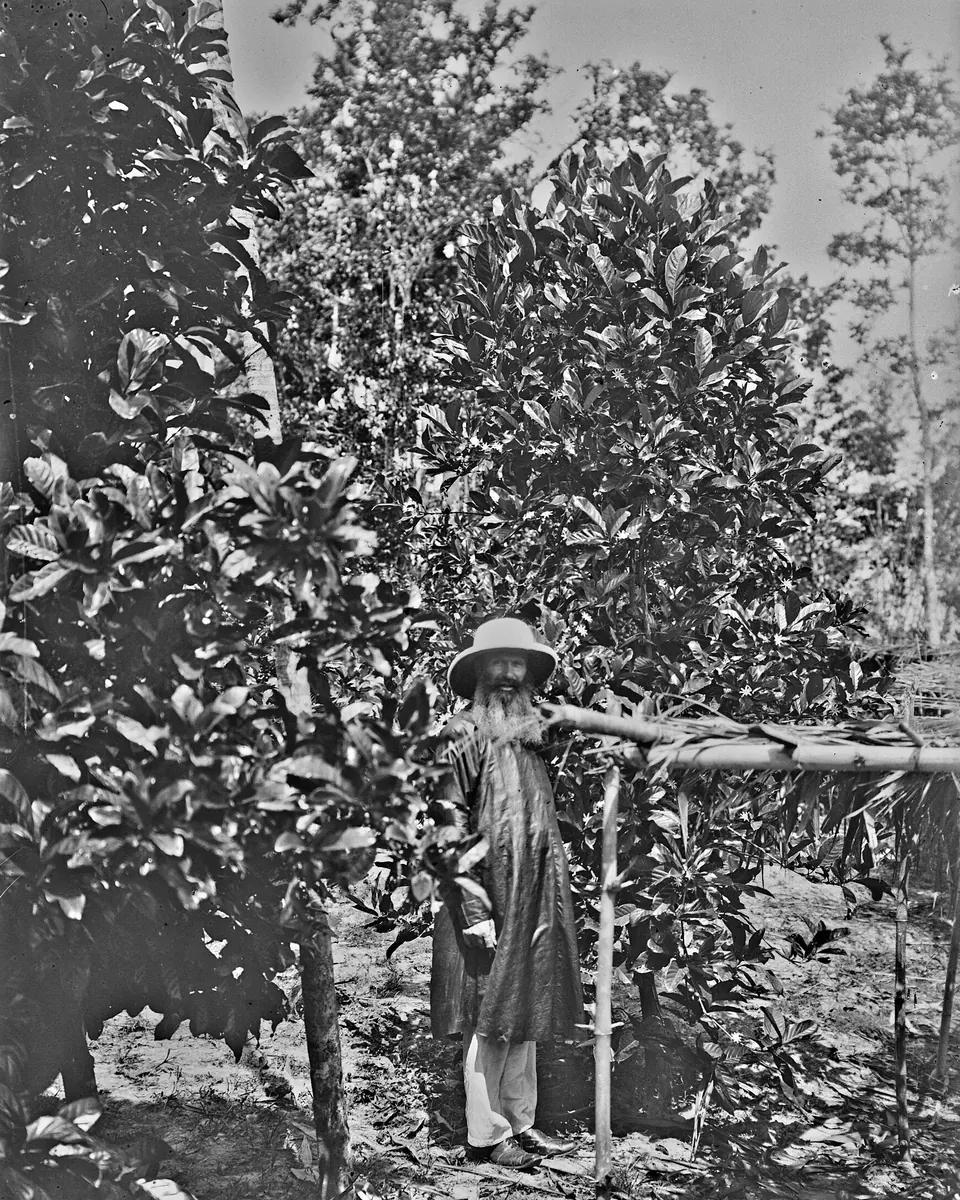
Coffee arrived in Vietnam with French colonization in the 1850s; in 1857, a French priest brought a single arabica tree to the country hoping to turn it into a crop. Today Vietnam is known mainly for robusta, which makes up about 95% of its coffee production (Meneses, 2023). Condensed milk became part of the drink early on because fresh milk was hard to find when coffee first arrived (Meneses, 2023), and it keeps without refrigeration because it is preserved with sugar (Copper Cow Coffee, n.d.). The French influence also explains the traditional dark, French-style roast (Copper Cow Coffee, n.d.).
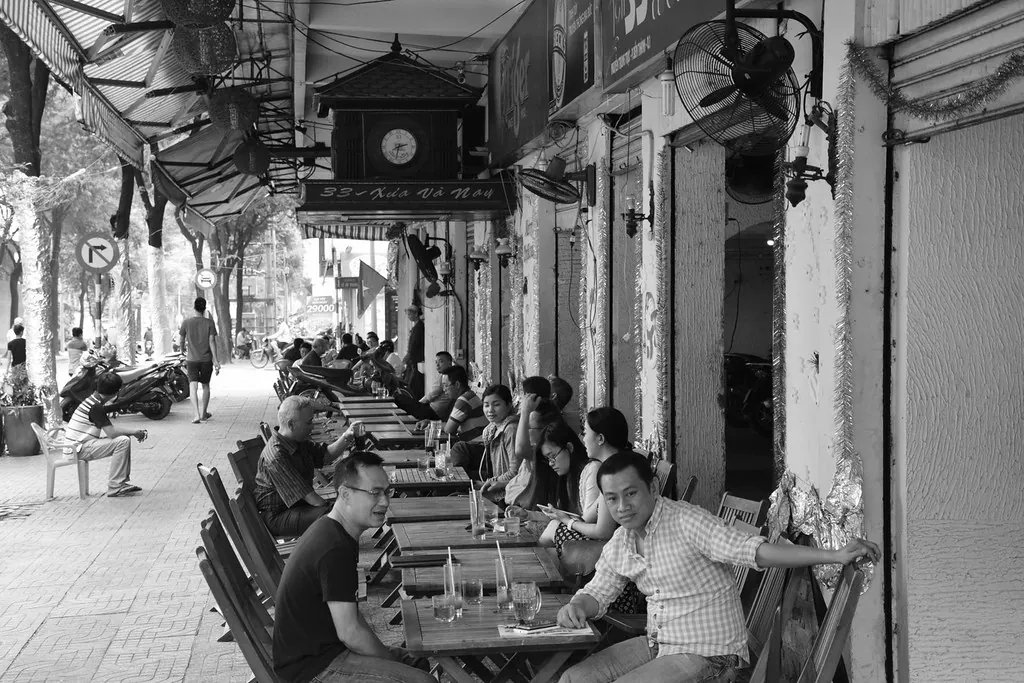
Vietnamese phin coffee is more than a drink. It is a window into Vietnam’s coffee culture and its history. Try it at home; it might become your favorite way to slow down.
FAQ
What coffee is best for a phin?
A dark roast, ground fine, is traditional, often robusta or a robusta–arabica blend for a bold, chocolatey cup.
How long does Vietnamese phin coffee take to brew?
About 5 minutes, including a 45-second bloom. The first drops should fall within 2 minutes.
Why is my phin dripping too fast or not at all?
Grind size is the main lever: too coarse drips fast and tastes weak; too fine can stall. Leveling the grounds and seating the gravity press gently also helps.
Do I have to use condensed milk?
No. Phin coffee is great black, with sugar, or with regular milk; condensed milk is simply the classic pairing (Nguyen, 2018).
Curious how other methods compare? Read my guides to pour-over and flash brew and espresso.
References
- Copper Cow Coffee. (n.d.). What is Vietnamese coffee? https://coppercowcoffee.com/pages/what-is-vietnamese-coffee
- Meneses, E. (2023, February 15). An unfiltered history of Vietnamese coffee. Barista Magazine. https://www.baristamagazine.com/an-unfiltered-history-of-vietnamese-coffee/
- Nguyen, S. (2018, November 14). How to brew Vietnamese coffee with a phin filter. Nguyen Coffee Supply. https://nguyencoffeesupply.com/blogs/vietnamese-coffee-brew-guide/traditional-vietnamese-drip-phin