Espresso Explained: Brew Ratio, Extraction and TDS
What is espresso?
Do I really need to introduce this? Just kidding. Espresso is a small, concentrated coffee made by forcing hot water through finely ground, tightly packed coffee at high pressure. The Specialty Coffee Association’s classic definition is a 25–35 ml drink brewed from 7–9 g of coffee (14–18 g for a double) with water at 90.5–96.1 °C, at 9–10 atmospheres of pressure, in 20–30 seconds, topped with a thick, dark golden crema. Modern cafés have moved on a little: a 2016 survey of baristas found the typical shot uses an 18–20 g dose, yields about 36.5 g, and runs 25–30 seconds at 9 bars, close to a 1:2 brew ratio (Specialty Coffee Association, 2018). Espresso is also the base of lattes, cappuccinos, and Americanos.
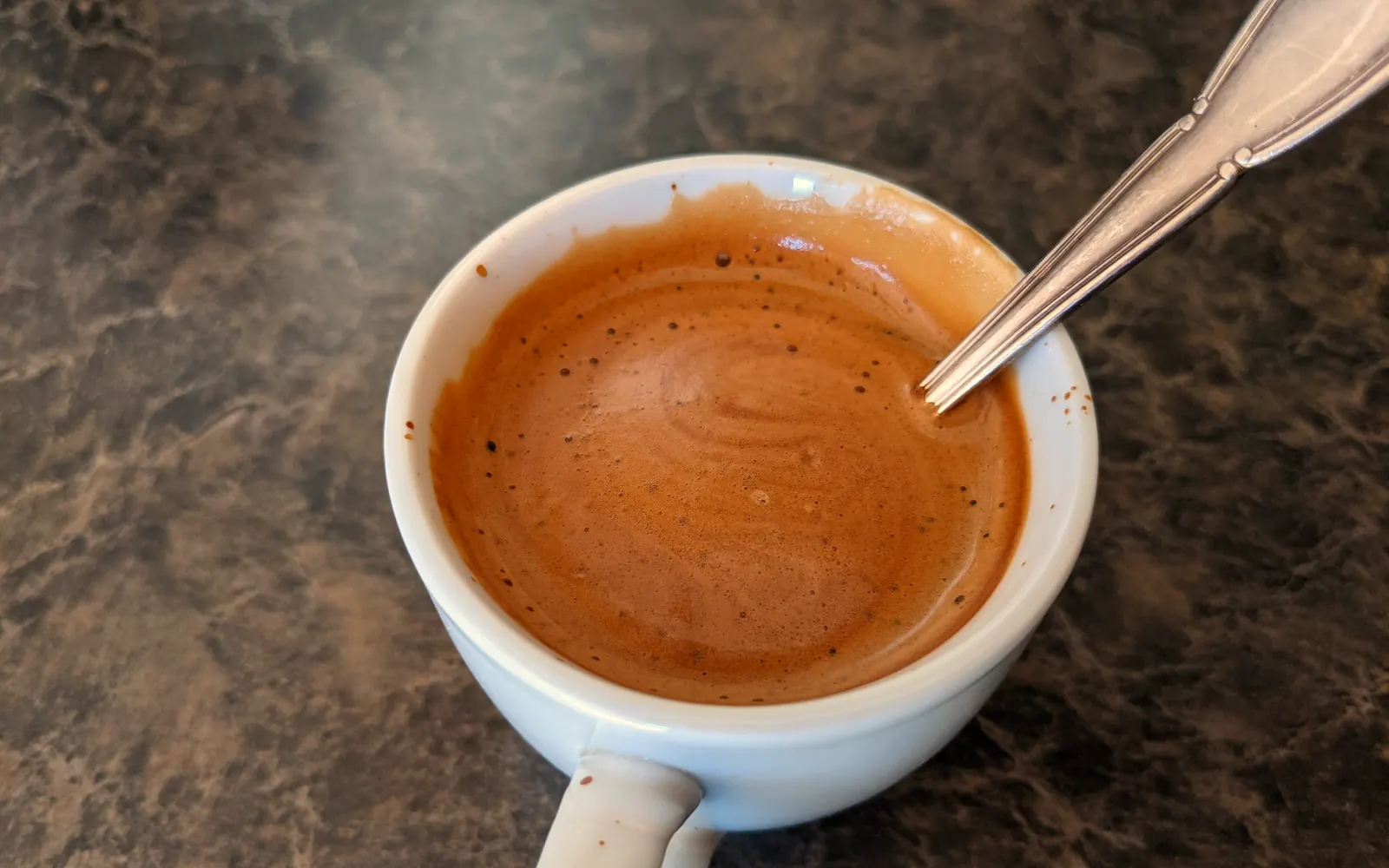
My usual espresso profile
- Coffee
- 18–20 g8–10 g for a single shot
- Grind size
- FineFiner than for pour-over; dial in by time
- Water temp.
- 88–96 °C190–205 °F
- Pressure
- 8–10 bars
- Brew time
- 25–30 s
- Yield
- 1 oz (30 ml)Single shot; 2 oz for a double
How to pull an espresso shot, step by step
- Dose and grind. Weigh 18–20 g of coffee for a double and grind it fine, just before brewing.
- Distribute and tamp. Level the grounds in the basket, then tamp firmly and evenly. A level, consistent tamp matters more than how hard you press (Jemison, 2022).
- Brew. Start the shot and a timer together. Aim for about twice the dose in the cup (around 36–40 g) in 25–30 seconds.
- Adjust. If the shot runs fast and tastes sour, grind finer. If it runs slow and tastes bitter, grind coarser. Change one variable at a time (Jemison, 2022).
- Taste. The numbers are a starting point; the cup decides.
Why is a great espresso so hard to pull?
Small changes in grind size, dose, or tamp change how water moves through the coffee. Water takes the easiest path, so an unevenly packed bed extracts unevenly: some coffee is over-extracted and bitter while the rest is under-extracted and sour, even when the average looks fine (Moroney et al., 2019). The machine’s pump holds about 9 bars, but the pressure that actually builds in the basket depends on the resistance of the coffee puck itself (Teahan, 2019). That is why grind and puck preparation make or break the shot.
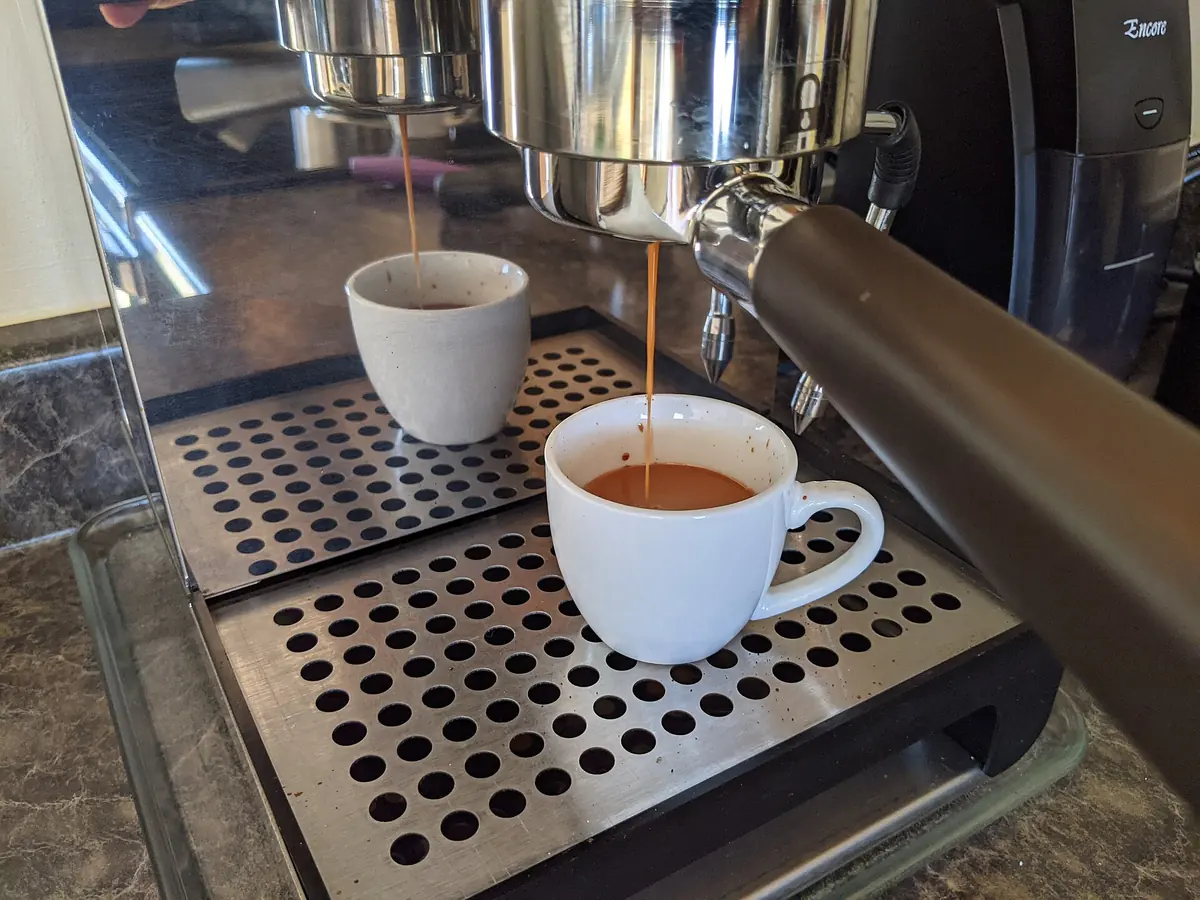
The process is unforgiving: small mistakes amplify into real defects. Great espresso takes patience, attention to detail, and a willingness to keep adjusting.
TDS, extraction yield, and brew ratio
Total Dissolved Solids (TDS) measures how concentrated the espresso is: the share of the drink that is dissolved coffee. It drives strength, intensity, and mouthfeel, and a typical espresso lands around 8–12% TDS (Winarso et al., 2024). Extraction yield is how much of the dry coffee ended up in the cup, and it is calculated from TDS: extraction yield = TDS × beverage weight ÷ dose. For example, 36 g of espresso at 10% TDS from an 18 g dose is a 20% extraction.
A brewing control chart plots the two together. Once you pick a brew ratio, every shot you pull lands on that ratio’s line: grinding finer or brewing longer moves you up the line, and only a new ratio moves you to another line (Barista Hustle, n.d.).
Espresso brewing control chart
Strength (TDS) against extraction yield. Each line is a brew ratio (dose : beverage weight); the shaded box is the common espresso target of 18–22% extraction and 8–12% TDS.
Show the data as a table
| Brew ratio | EY 18% | EY 20% | EY 22% |
|---|---|---|---|
| 1:1.5 | 12.0 | 13.3 | 14.7 |
| 1:2 | 9.0 | 10.0 | 11.0 |
| 1:2.5 | 7.2 | 8.0 | 8.8 |
| 1:3 | 6.0 | 6.7 | 7.3 |
Redrawn from the brewing control chart described by Barista Hustle; target zone from Winarso et al. (2024). Lines use TDS = extraction yield ÷ (beverage weight ÷ dose). Target zones vary by source; treat the box as a starting point for tasting.
How to use the chart
- Sour, thin, or salty: you are probably left of the box. Grind finer to raise extraction.
- Bitter, dry, or harsh: you are probably right of the box. Grind coarser.
- Balanced but too intense: move to a longer ratio, such as 1:2.5.
- Balanced but too weak: move to a shorter ratio, such as 1:1.5.
FAQ
What is a good TDS for espresso?
Most espresso lands between 8% and 12% TDS. Where you land inside that range depends on your brew ratio and taste (Winarso et al., 2024).
What is the standard espresso brew ratio?
About 1:2, for example 18 g of coffee to 36 g of espresso; that was the average in the SCA’s barista survey (Specialty Coffee Association, 2018). Shorter ratios like 1:1.5 taste richer and more intense.
How long should an espresso shot take?
Usually 25–30 seconds from the start of the shot. Good shots can fall anywhere from about 25 to 35 seconds (Jemison, 2022).
What pressure is espresso brewed at?
About 9 bars. The classic definition allows 9–10 atmospheres (Specialty Coffee Association, 2018).
Prefer a gentler cup at home? Try pour-over or the Vietnamese phin.
References
- Barista Hustle. (n.d.). The coffee control chart. https://www.baristahustle.com/?p=2173
- Jemison, S. (2022, October 24). How to pull the perfect shot of espresso. Clive Coffee. https://clivecoffee.com/blogs/learn/how-to-make-great-espresso
- Moroney, K. M., O’Connell, K., Meikle-Janney, P., O’Brien, S. B. G., Walker, G. M., & Lee, W. T. (2019). Analysing extraction uniformity from porous coffee beds using mathematical modelling and computational fluid dynamics approaches. PLOS ONE, 14(7), e0219906. https://doi.org/10.1371/journal.pone.0219906
- Specialty Coffee Association. (2018, February 1). Defining the ever-changing espresso. 25 Magazine, Issue 3. https://sca.coffee/sca-news/25-magazine/issue-3/defining-ever-changing-espresso-25-magazine-issue-3-zyx36
- Winarso, R., Khoeron, S., Wibowo, R., & Darmanto, D. (2024). The effect of temperature, pressure, and grind size on total dissolved solids (TDS) and extraction yield of semi-automatic espresso machines. Jurnal Polimesin, 22(3), 288. https://doi.org/10.30811/jpl.v22i3.4636
- Teahan, M. (2019, July 24). Pressure and flow: A guide for espresso technicians. Daily Coffee News. https://dailycoffeenews.com/2019/07/24/pressure-and-flow-a-guide-for-espresso-technicians/